Fort Lapwai History
Built in response to the gold rush and later the center of army operations during the Nez Perce Flight of 1877, Fort Lapwai stands as a reminder of the military pressure that shaped the lives of the nimíipuu.
Gold Rush and Establishment
In 1860, gold was discovered on a tributary of the Clearwater River near present-day Orofino. News spread quickly, and by spring 1861 thousands of miners poured onto the Nez Perce reservation, trespassing on land set aside by the Treaty of 1855. Unable to stop the invasion, civilian authorities called on the military to establish a fort. In fall 1862, two companies of volunteers arrived to build an army post that would become Fort Lapwai — two miles above Lapwai Creek.
The fort served a dual purpose: to protect the Nez Perce from invading miners and to enforce U.S. government control over the reservation. From 1862 to 1885, Fort Lapwai remained garrisoned with a military presence.
The Fort During the Flight of 1877
It was at Fort Lapwai in spring 1877 that General Oliver Otis Howard, commander of the Department of the Columbia, delivered his fateful order: Chief Joseph's band and all other non-treaty Nez Perce must leave their homeland in the Wallowa Valley and move to the reservation — in thirty days.
When conflict erupted in June 1877, Fort Lapwai became the center of army operations. The fort's stockade held prisoners taken during the war and Nez Perce who returned to the reservation after hostilities ended.
The Post
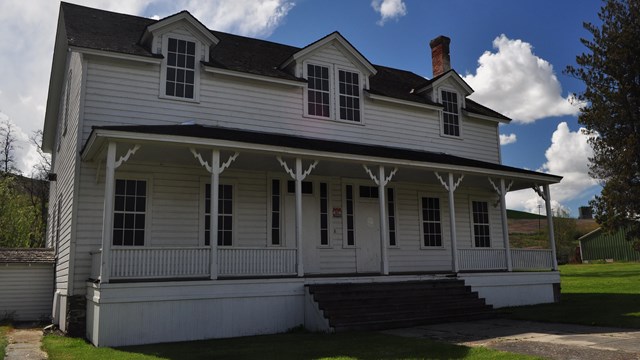
The bulk of Fort Lapwai's buildings were constructed between 1862 and 1884. The post included barracks, officers' quarters, stables, warehouses, and corrals — a full military installation. Most structures no longer stand. The National Park Service maintains an officers' duplex built in 1883, though it is currently closed to the public.